
Navigating U.S. Immigration Filings: From Client Intake and Eligibility Screening to Complete Visa Application Packets
Navigating U.S. Immigration Filings: From Client Intake and Eligibility Screening to Complete Visa Application Packets
- March 9, 2026
- Raunak Chaliha
- 8:59 am

Know your Author
Raunak Chaliha
Senior Lawyer & Partner
Raunak Chaliha is a legal operations professional focused on building scalable support systems for modern law firms. With experience across legal process management, client coordination, and operational workflows, he works at the intersection of legal services and process optimization.
U.S. immigration law is highly procedural and documentation-driven. Whether an applicant is pursuing a work visa, family-based immigration benefit, or permanent residence, the success of the case often depends on the accuracy and completeness of the filing. From the first client consultation to the final submission of the application packet, every step must follow strict regulatory requirements.
Because immigration filings are reviewed by the U.S. Citizenship and Immigration Services (USCIS) and other federal agencies, incomplete documentation or inaccurate forms can lead to delays, requests for additional evidence, or denial of the application. A structured workflow — beginning with client intake and ending with a complete visa application packet — plays a crucial role in successful immigration case management.
Client Intake and Eligibility Screening
The immigration process begins with client intake and eligibility screening. During this stage, attorneys and legal professionals collect key information about the applicant’s background, immigration history, employment status, and family relationships.
Eligibility screening helps determine whether the applicant qualifies for a particular immigration benefit under U.S. immigration law. For example, employment-based visas require documentation related to job offers, employer sponsorship, and professional qualifications.
Accurate intake information is essential because immigration filings rely heavily on consistent data across multiple forms and supporting documents. Discrepancies in personal details, employment history, or travel records can create complications later in the review process.
Structured intake systems help ensure that attorneys have the necessary information to evaluate eligibility and prepare appropriate filings.
Visa Application Form Preparation
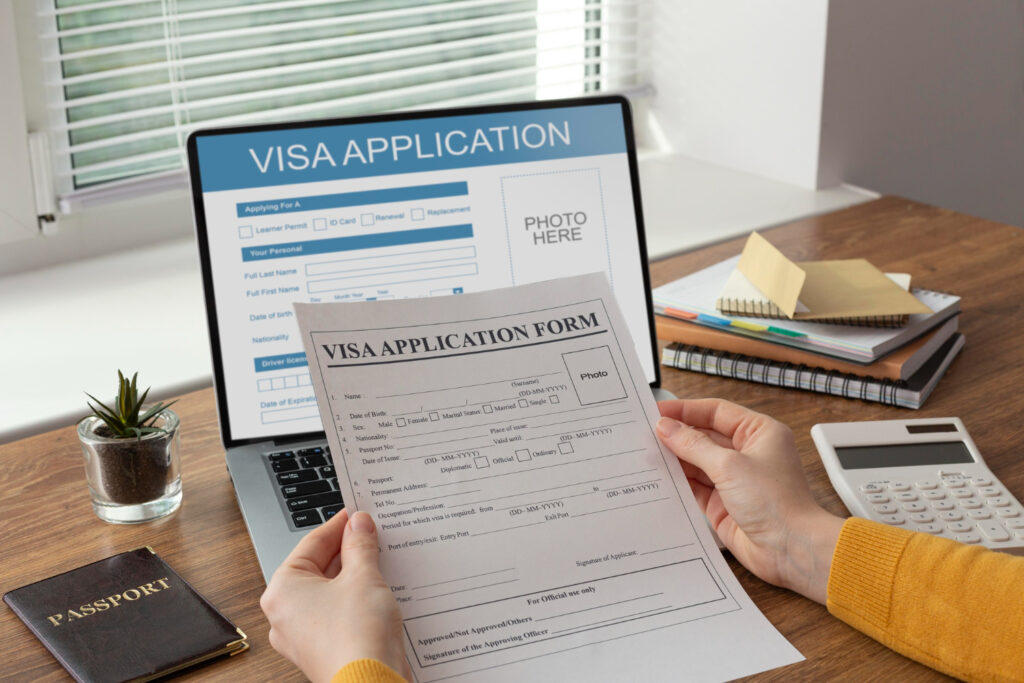
Once eligibility has been established, the next step involves preparing the necessary visa application forms.
Immigration filings often involve multiple government forms depending on the type of application. These forms may request detailed information about an applicant’s background, employment, family members, and immigration history.
Because USCIS relies on the information provided in these forms to evaluate applications, accuracy is critical. Inconsistent or incomplete information can result in delays or additional review.
Preparing visa application forms requires careful attention to detail and consistency across all documentation submitted with the application.
Supporting Documentation and Evidence
In addition to government forms, immigration applications must include supporting documents that verify the applicant’s eligibility.
Typical supporting documentation may include:
- Identification documents
- Educational records
- Employment verification
- Financial records
- Marriage or birth certificates
Applicants must also ensure that documents written in foreign languages are accompanied by certified translations when submitted to U.S. immigration authorities.
Because immigration petitions often require extensive supporting documentation, maintaining a structured checklist helps ensure that all required evidence is included in the final submission.
Requests for Evidence (RFEs) and Case Monitoring
Even when applications are carefully prepared, USCIS may issue a Request for Evidence (RFE) if additional information is required to evaluate the case.
An RFE is a formal notice requesting additional documentation or clarification. Applicants must respond within the timeframe specified by USCIS. Failure to respond properly may result in denial of the petition.
Preparing an RFE response involves reviewing the government’s request, gathering additional documentation, and drafting a response that addresses each issue raised.
In addition to responding to RFEs, immigration cases require ongoing monitoring. Applicants and attorneys often track case status through the USCIS online system to stay informed about updates, requests, or approvals.
Preparing Complete Immigration Application Packets
The final stage of the immigration filing process involves assembling the application packet for submission.
A complete packet typically includes:
- Completed government forms
- Supporting documentation
- Affidavits or declarations
- Translations where required
- Filing fees and cover letters
Proper organization of the application packet helps immigration officers review the case efficiently. Clearly labeled documents and well-structured submissions reduce the likelihood of delays during the adjudication process.
Because immigration filings often involve multiple documents and deadlines, structured document management is essential.
Why Law Pilot Inc Is the Ideal LPO Partner for Immigration Law Practices
Immigration law firms handle high volumes of documentation and time-sensitive filings. Maintaining accuracy while managing multiple cases can be challenging without structured operational support.
Law Pilot Inc provides specialized Legal Process Outsourcing (LPO) services designed specifically for immigration law practices.
Law Pilot Inc assists firms with:
- Client intake and eligibility screening support
- Visa application form preparation
- Supporting document checklist management
- Affidavit drafting assistance
- Case status tracking
- RFE response drafting support
- PERM documentation preparation
- Adjustment of status packet preparation
- Consular processing packet preparation
- Naturalization application preparation
- Translation coordination
- USCIS filing tracking
By managing documentation-heavy processes, Law Pilot Inc helps immigration attorneys maintain organized case workflows while reducing administrative pressure.
Unlike general outsourcing providers, Law Pilot Inc focuses specifically on legal process support. This ensures that immigration documentation is prepared with accuracy, confidentiality, and compliance with professional legal standards.
Attorneys can therefore focus on client counseling and case strategy while operational tasks are handled efficiently.
Conclusion
U.S. immigration filings require careful attention to detail at every stage of the process. From initial client intake and eligibility screening to the preparation of complete visa application packets, structured workflows play a critical role in successful case management.
Accurate forms, organized supporting documents, and timely responses to government requests help ensure that immigration applications proceed smoothly.
For immigration law firms seeking reliable operational support, Law Pilot Inc provides specialized LPO services that help streamline documentation workflows, maintain accuracy, and support efficient immigration case management.